

Asbestos in UK Homes: Where It’s Commonly Found
Asbestos was widely used in UK construction for decades due to its strength, fire resistance and insulating properties. Although it was fully banned in 1999, many homes built or refurbished before this date may still contain asbestos-containing materials (ACMs). For homeowners, landlords and buyers, understanding where asbestos is commonly found is essential for maintaining safety and complying with legal responsibilities.
At Acron Asbestos, we regularly carry out asbestos surveys, sampling and removal across residential and commercial properties. In this guide, we explain where asbestos is most likely to be present in UK homes and what you should do if you suspect it.
What Is Asbestos and Why Was It Used?
Asbestos is a naturally occurring mineral made up of fine fibres. It was commonly used in building materials because it is durable, heat-resistant and provides excellent insulation. Unfortunately, when asbestos is disturbed, it can release fibres into the air which, when inhaled, can cause serious health conditions such as asbestosis, lung cancer and mesothelioma.
This is why identifying and managing asbestos safely is so important, particularly in older properties.
When Should You Be Concerned About Asbestos?
If your home was built or renovated before the year 2000, there is a possibility that asbestos may be present. It is not always dangerous if left undisturbed and in good condition, but problems arise when materials are drilled, cut, sanded or damaged during maintenance or refurbishment work.
This makes asbestos surveys particularly important before:
- Renovations or structural changes
- Installing new kitchens or bathrooms
- Rewiring or plumbing works
- Loft conversions or extensions
Common Places Asbestos Is Found in UK Homes
Asbestos can be present in a wide range of building materials, both inside and outside the property. Below are some of the most common locations.
1. Artex Ceilings and Textured Coatings
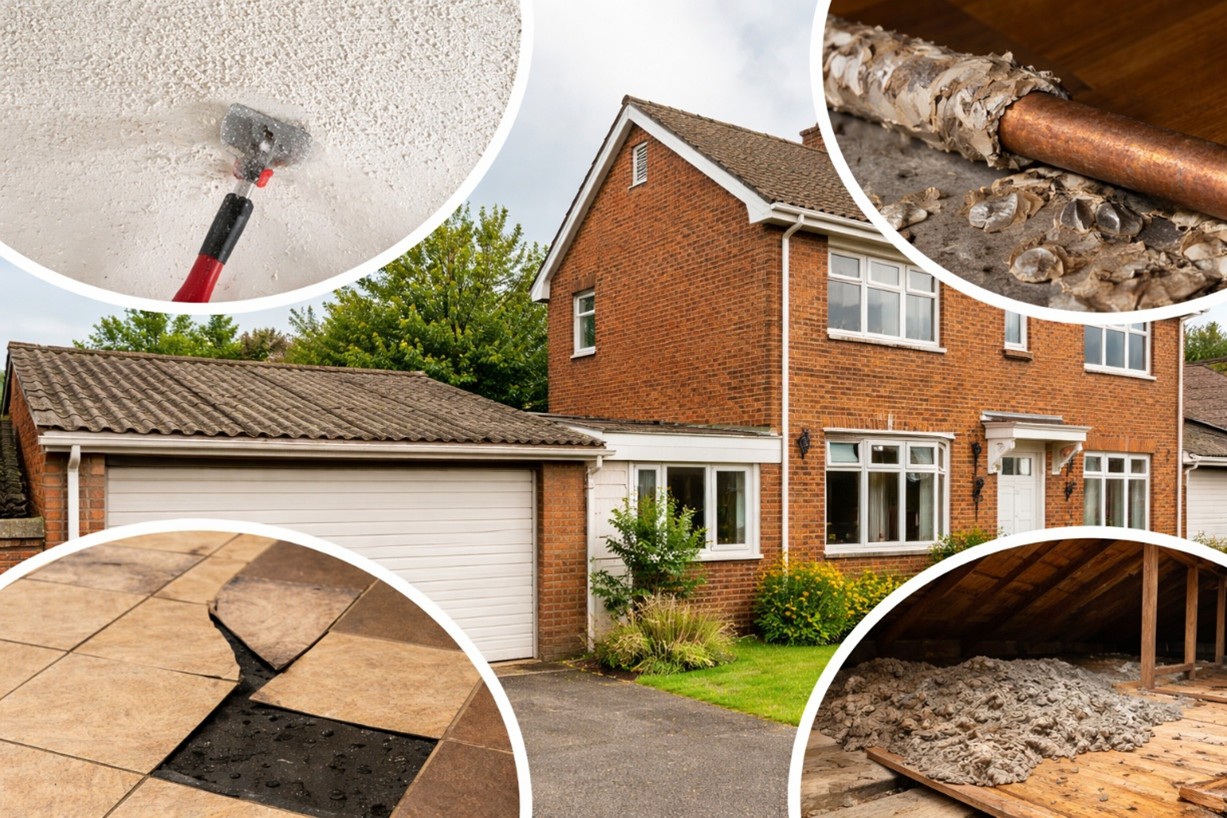
One of the most well-known uses of asbestos in homes is in textured decorative coatings such as Artex. These were especially popular from the 1960s through to the 1980s.
Asbestos fibres were often added to strengthen the material. While these ceilings are generally safe if left intact, sanding or scraping them during refurbishment can release fibres.
2. Floor Tiles and Adhesives
Vinyl floor tiles and the adhesives used to fix them in place can contain asbestos. These are commonly found in kitchens, hallways and utility rooms in older homes.
Removing or replacing flooring without proper precautions can disturb asbestos fibres, so professional assessment is recommended.
3. Insulation Board (AIB)
Asbestos insulation board was widely used for fireproofing and insulation. It can be found in:
- Partition walls
- Ceiling tiles
- Soffits
- Boxing around pipes
AIB is considered a higher-risk material because it can release fibres more easily if damaged.
4. Pipe Lagging and Boiler Insulation
Older heating systems may include asbestos in pipe lagging or boiler insulation. This type of asbestos material is particularly hazardous due to its friable nature, meaning it can easily release fibres.
If your property has an older boiler or exposed pipework, it is important to have it checked.
5. Roof Sheets and Garage Roofs
Many garages, sheds and outbuildings constructed before 2000 use asbestos cement sheets for roofing. These are more stable than other asbestos materials but can still pose a risk if broken or deteriorating.
You may also find asbestos cement in wall panels, gutters and downpipes.
6. Loft Insulation
In some cases, asbestos was used in loose-fill insulation in loft spaces. This is one of the more dangerous forms because it is not bonded into a solid material and can spread easily.
If you are planning loft work or insulation upgrades, this should always be assessed first.
7. Doors and Fireproof Panels
Fire doors and panels in older homes may contain asbestos, particularly in properties that required additional fire protection measures.
These materials are usually safe if intact but should not be altered without proper checks.
8. Toilet Cisterns and Water Tanks
Some older plastic or cement-based cisterns and tanks may contain asbestos. While less commonly disturbed, they can still present a risk if removed or replaced incorrectly.
What Should You Do If You Suspect Asbestos?
If you think a material in your home may contain asbestos, the most important thing is not to disturb it. Attempting to remove or test it yourself can be dangerous and may expose you and others to harmful fibres.
Instead, you should arrange for professional asbestos sampling or a full survey. At Acron Asbestos, we provide:
- Asbestos management surveys
- Refurbishment and demolition surveys
- Asbestos sampling and testing
- Safe asbestos removal services
Our experienced team ensures all work is carried out in line with UK regulations, giving you complete peace of mind.
Why an Asbestos Survey Is Essential
An asbestos survey is the only reliable way to confirm whether asbestos is present in your property. It allows you to:
- Identify the location and condition of asbestos materials
- Assess the level of risk
- Plan safe renovation or maintenance work
- Comply with legal responsibilities as a landlord or property owner
For anyone planning work on a property built before 2000, a refurbishment survey is particularly important.
Final Thoughts
Asbestos remains present in many UK homes, particularly those built or updated in the 20th century. While it does not always pose an immediate risk, it becomes dangerous when disturbed.
Understanding where asbestos is commonly found is the first step in protecting your property and the people within it. If you are unsure, always seek professional advice rather than taking unnecessary risks.
Contact Acron Asbestos
If you are planning renovations, purchasing a property or simply want reassurance, Acron Asbestos is here to help. Our expert team provides reliable asbestos surveys, sampling and removal services across residential and commercial properties.
Get in touch today to arrange an inspection and ensure your home is safe, compliant and ready for the future.